Class of 2023
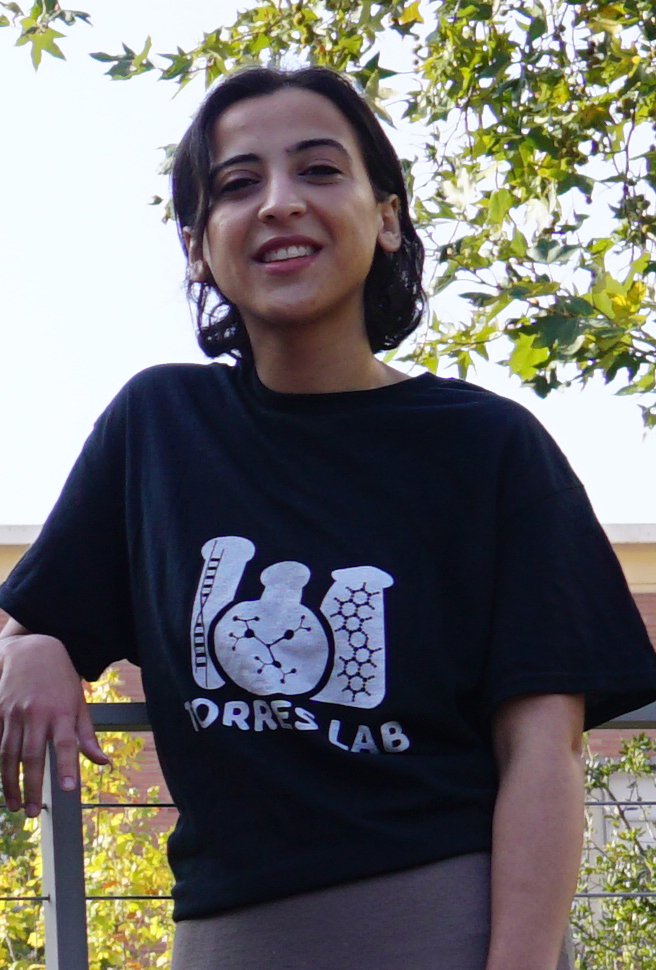



Abdusamad, Mai is in the Biochemistry, Molecular and Structural Biology Graduate Program, and joined the CMB Training Program in 2023.
Mentor: Dr. Jorge Torres
Research project: Cell division is characterized by a sequence of highly regulated events that ensures the proper alignment and faithful segregation of chromosomes. Misregulation of key mitotic events, including chromosome alignment and segregation, can lead to genetic mutation that promotes abnormal cell proliferation and tumorigenesis. To better understand cell division and its misregulation in human disease, the Torres lab performed a genetic RNAi screen for novel mitotic regulators and identified the dual-specificity phosphatase DUSP12. While DUSP12 has been shown to possess pro-survival attributes, it is unclear if this is related to its potential role in cell division. However, the lack of known DUSP12 targets has hindered our understanding of the biological significance of this unique enzyme.
Bartashevitch, Theodosia is in the Biochemistry, Molecular and Structural Biology Graduate Program, and joined the CMB Training Program in 2023.
Mentor: Dr. Yi Tang and Dr. Jose Rodriguez
Research project:
Clark, Evan is in the Biochemistry, Biophysics, & Structural Biology (BBSB) home area of the MBIDP, and joined the CMB Training Program in 2023.
Mentor: Dr. Siavash Kurdistani
Research project: Copper is an essential metal that serves as a co-factor for enzymes involved in a wide range of cellular functions including mitochondrial respiration, reactive oxygen species detoxification, and iron uptake1. Copper must be in its reduced Cu1+ form for cellular distribution to its target proteins. However, it was not known if and how cells modulated copper ion oxidation state. To this end, the Kurdistani lab discovered that histone H3 is an enzyme with copper reductase activity that reduces Cu2+ to Cu1+ 2. With this finding came new questions about how copper ions are chaperoned in and out of the nucleus. In search of potential protein chaperones for Cu2+ ions, the lab noticed that a region within the budding yeast rDNA locus displays transcriptional changes in response to cellular copper levels and alterations in histone H3 copper reductase activity. This region, known as the Non-Transcribed Spacer 2 (NTS2) and the lab noticed that within NTS2, there is a potential open reading frame (ORF) encoding a 30 a.a. peptide with a predicted structure capable of binding Cu2+ ions. Evan proposed experiments to follow up and characterize the protein produced from this gene.
De Ocampo, Haley is in the Biochemistry, Molecular and Structural Biology Graduate Program, and joined the CMB Training Program in 2023.
Mentor: Dr. Roy Wollman
Research project: Spatial transcriptomic tools like multiplexed error-robust fluorescence in situ hybridization (MERFISH) offer powerful techniques for understanding the spatial organization and gene interactions within cells. Haley’s research centers on mapping gene-gene and cell-cell communication networks in response to mild traumatic brain injury (mTBI) in mouse models. mTBI is the most prevalent form of brain injury, often leading to lasting impacts on cognitive function and mood. The study focuses on the hippocampus and prefrontal cortex, regions particularly vulnerable to injury and linked to cognitive and emotional disorders when dysregulated. Haley uses MERFISH to comprehensively map gene expression changes in these brain areas with the aim to uncover the molecular mechanisms driving mTBI and to advance diagnostic and therapeutic approaches.
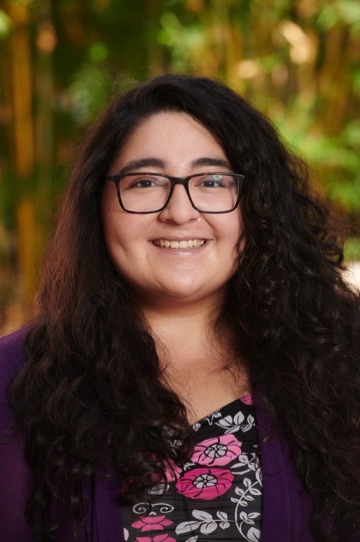


Emami, Melissa is in the Cell & Developmental Biology (CDB) home area of the MBIDP, and joined the CMB Training Program in 2023
Mentor: Dr. Alvaro Sagasti
Research project: During embryonic development, multiple cell types interact to form multicellular tissues. Contact inhibition of locomotion (CIL) is one self-organizing form of cell interactions that patterns tissues. Melissa has found that developing sensory axons and a newly-discovered population of specialized migratory cells (MCs) in the skin undergo CIL. Live imaging and analysis of cell type-specific markers revealed that these MCs arise from EMT of basal epithelial cells, migrate through the epidermis, undergo MET into the superficial epithelial layer, and ultimately differentiate into mucus cells and ionocytes. Both MCs and touch sensing peripheral sensory axons grow in the same epidermal territory and must ultimately be distributed evenly throughout the epidermis. Melissa hypothesizes that MC migratory behavior and distribution is dependent on heterotypic CIL with sensory axons. To test this hypothesis, Melissa is characterizing the influence of sensory axons on MCs in the presence and absence of sensory axons.
Minor, Christine is in the Biochemistry, Molecular and Structural Biology Graduate Program, and joined the CMB Training Program in 2023.
Mentor: Dr. Robert Clubb
Research project: Clostridium thermocellum (CT) is the most cellulolytic microorganism because of its suite of cellulolytic enzymes assembled on specialized protein complexes called cellulosomes. Cellulosomes are large, surface-displayed enzyme complexes formed by an intricate network of protein-protein interactions mediated by pairs specific cohesin-dockerin interactions. Christine’s research investigates the diversity and organization of cellulosomes across microbial species. To address this gap, she has conducted a comprehensive genomic screen of over 300,000 bacterial genomes, resulting in 33 novel celluosome-producing bacterial species. Building on this work, she used structure-based computational approaches to uncover highly divergent protein components that are not detectable using traditional sequence-based methods. In collaboration with the UCLA-DOE. she leveraged AlphaFold2 to predict 41,171 atomic structures within 42 Ruminococcus reference genomes and identified putative cohesin domains that are highly divergent in sequence but structurally conserved. Her computational analysis of sequence-divergent cohesin domains has guided ongoing research to experimentally map the interactions that govern cellulosome assembly using a high-throughput protein interaction assay coupled with fluorescence activated cell sorting (FACS). Together, her thesis work integrates genomics, structural biology, and biochemical approaches to expand our understanding of cellulosome architecture with implications for engineering microbial platforms for efficient biomass conversion.
Moser, Matthew is in the Immunity, Microbes & Molecular Pathogenesis (IMMP) Home Area of the MBIDP, and joined the CMB Training Program in 2023
Mentor: Dr. Elissa Hallem
Research project: The soil-dwelling, skin-penetrating nematode Strongyloides stercoralis infects over 610 million individuals in predominantly tropical and sub-tropical areas. S. stercoralis is responsible for decades-long infections, and fatalities can occur in immunocompromised individuals experiencing high parasite burden or larval dissemination. Infection occurs when infective third-stage larvae (iL3s) penetrate host skin. It has been suggested that skin-penetrating nematodes puncture host skin by releasing a protease-rich excretory-secretory (ES) product however the exact molecular mechanisms by which these parasites invade host tissue is not well understood. Astacins, a large family of zinc metalloproteinases, are abundant in the ES product and have been suggested to be directly involved in skin penetration. However, only one astacin gene (SSTP_0000422100) has been described and its role in skin penetration is only based on in vitro enzymatic analysis. To elucidate the function of astacins during skin penetration and determine a direct functional role for individual astacin genes, Matthew and his lab have identified several astacin genes that are highly upregulated in the iL3s compared to other life stages using publicly available RNA seq data. Matthew has identified a 8-gene, 15kb genomic region (which he has named the “42E” cluster since all the gene names start with the number “42”) that is contains 4221. Matthew hypothesizes that these genes are essential to produce key astacin proteins utilized during skin-penetration and that disruption to these genes would result in an inhibition of skin-penetration. Over the past year, he identified the spatial expression patterns of several genes and has developing a stable line of transgenic parasites lacking astacin genes to track their skin-penetrating behaviors.
Nia, Shervin is in the Biochemistry, Molecular and Structural Biology Graduate Program, and joined the CMB Training Program in 2023
Mentor: Dr. Alvaro Sagasti
Research project: Radiation damage poses a ubiquitous constraint to electron microscopy of biologically relevant materials. Immediately as a torrent of relativistic electrons illuminates the specimen of interest, it undergoes extraordinarily harsh levels of ionizing radiation, a million times greater than a lethal dose to humans. Thus, electron beam-induced radiation damage has been aptly labeled as the “fundamental limit” constraining structural biology methods. Theoretically, with no dose limit, biologists could have atomic-resolution videos of cells and biochemical processes. Thus, Shervin is making a herculean effort to attenuate radical progression and sample decay is necessary. The primary mechanisms of radiation damage which Shervin will address is the cleavage of the H2O bond into a hydrogen and hydroxyl radical, and the formation of a radical cation form of H2O leading to the release of a highly reactive secondary electron.
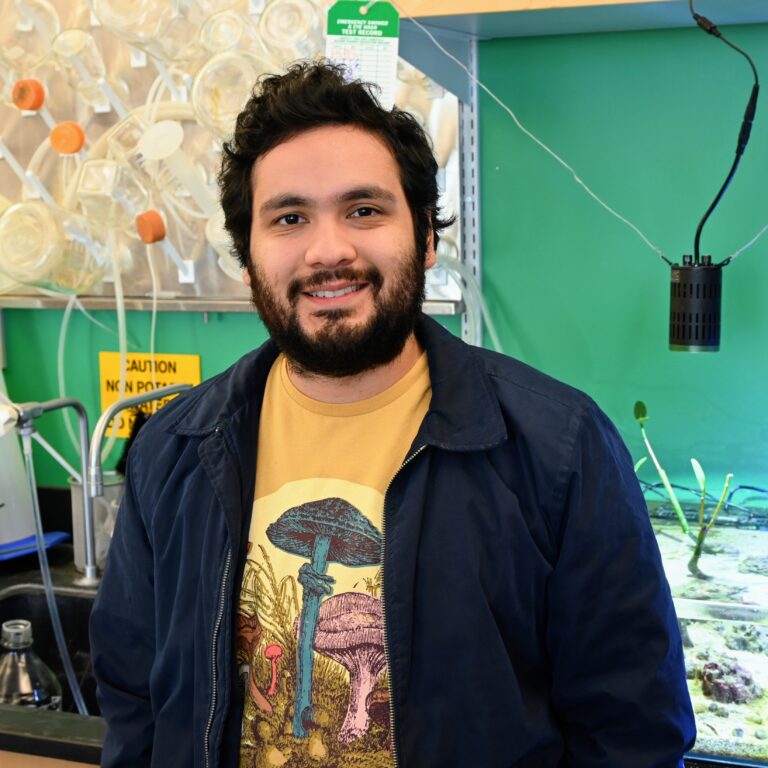


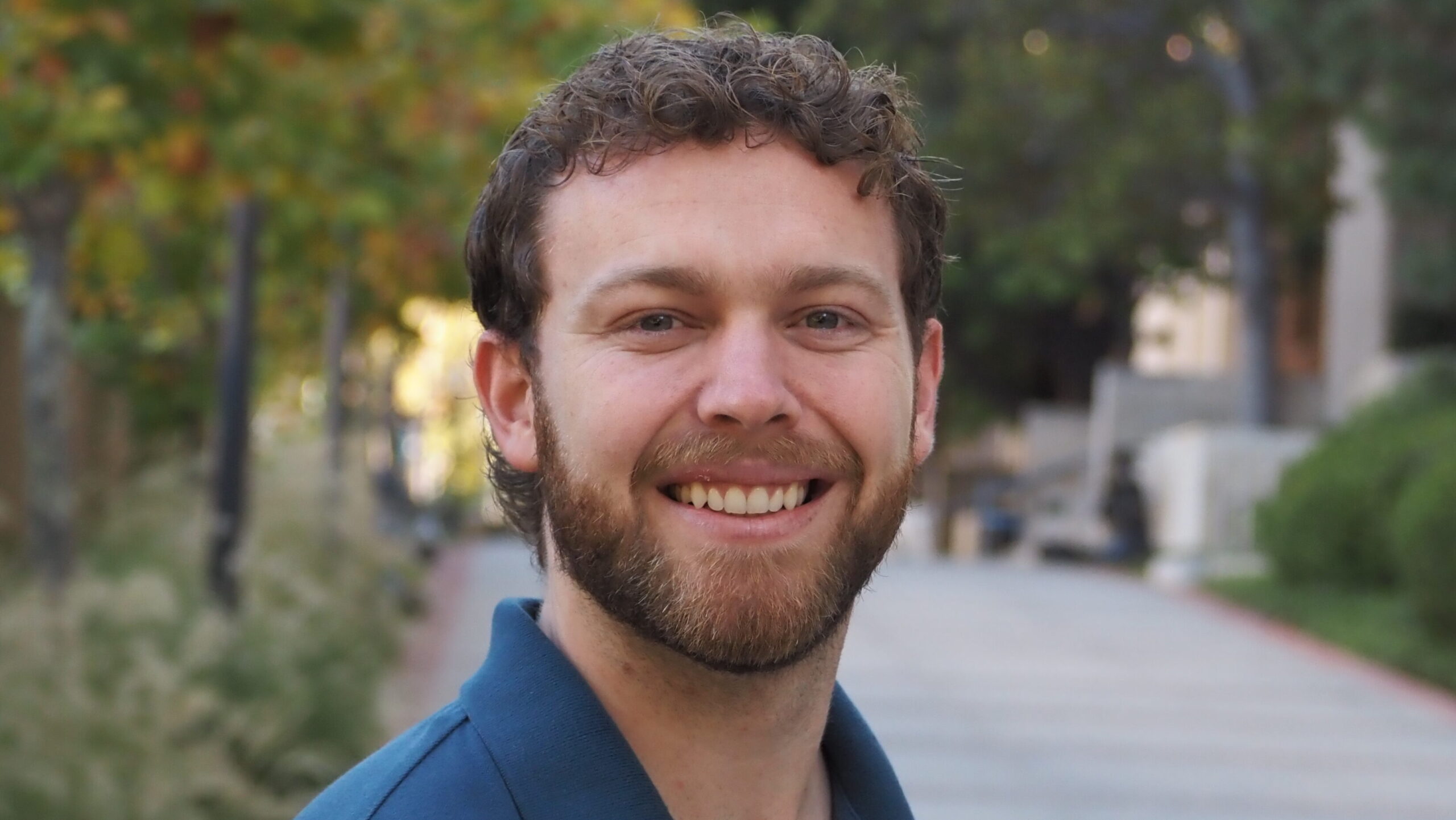
Peinado, Neil is in the Immunity, Microbes & Molecular Pathogenesis (IMMP) Home Area of the MBIDP, and joined the CMB Training Program in 2023
Mentor: Dr. Pavak K. Shah
Research project: The cell cycle is a key factor in the development of all multicellular organisms and its timing plays an important role in proper coordination of cellular proliferation and differentiation. The connection between the cycle and cell fate is observed across numerous metazoan species, yet the specifics relating them remain mysterious. How exactly does the timing of the cycle act as a regulatory input into cell fate determination and how does this timing facilitate the proper tuning of dynamic molecular processes? Neil hypothesizes that the timing and structure of the cycle play an essential role in the maintenance and execution of developmental fate programs. For the past year, Neil has used C. elegans to interrogate these connections. Neil has performed analyses into how temperature allows for alterations to cycle length while maintaining fate whereas genetic perturbations cause changes to both. He has specifically focused on how cycle structure may play a role in explaining this apparent paradox. Neil has also performed analyses of how genetic perturbations to cycle regulation may impact the activity and dynamics of the endoderm specifying GATA transcriptional network.
Roberson, Isaias is in the Cell & Developmental Biology (CDB) home area of the MBIDP, and joined the CMB Training Program in 2023
Mentor: Dr. Amander Clark
Research project: Isaias’s research focuses on the reconstituted ovary (rOvary), a stem cell-based ovarian organoid system that generates egg cells (oocytes) outside the body from primordial germ cell-like cells (PGCLCs). Despite producing functional oocytes, the majority cannot support embryonic development, pointing to fundamental deficiencies in in vitro oocyte maturation that remain poorly understood.
Ruvalcaba, Martin is in the Immunity, Microbes & Molecular Pathogenesis (IMMP) Home Area of the MBIDP, and joined the CMB Training Program in 2023
Mentor: Dr. Melody Man Hing Li
Research project: Alphaviruses are a genus of positive-sense RNA viruses that are known to cause encephalitis, infectious arthritis, joint pain, fevers, and rash. Certain alphaviruses are efficiently bound and subsequently degraded by zinc finger antiviral protein (ZAP), a crucial interferon-stimulated gene (ISG), during the host innate immune response. However, there are also alphaviruses known to evade inhibition by ZAP. The molecular mechanisms underlying this differential alphavirus sensitivity to ZAP are unknown. Martin hypothesizes that viral RNA binding (and thus inhibition) by ZAP is dependent on ZAP’s recognition of specific structural motifs on the viral RNA. Therefore, Martin’s proposed model to explain these differential sensitivities is that ZAP-sensitive alphaviruses have ZAP-recognizable structural motifs that result in ZAP-binding and inhibition while a ZAP-resistant alphavirus has distinct motifs near potential ZAP binding sites that prevents recognition, binding, and thus antiviral functions facilitated by ZAP.
Scully, Jack is in the Biochemistry, Molecular and Structural Biology Graduate Program, and joined the CMB Training Program in 2023
Mentor: Dr. Danielle Schmitt
Research project: Approach and Results: Jack has developed an intracellular glutamine optical reporter (iGlo), a genetically-encoded biosensor for glutamine. Jack designed iGlo by genetically fusing circularly permuted superfolder green fluorescent protein (cpsfGFP) to GlnH, a glutamine binding protein from Escherichia coli. He did this through a combination of rational protein design and directed evolution by screening mutants in bacterial lysate. After multiple rounds of evolution and selection, Jack developed an iGlo variant which increases in fluorescence over 600% in response to glutamine in live HeLa cells, with an apparent affinity for glutamine in the low micromolar. Jack is currently cloning targeted iGlo variants to the mitochondrial matrix, the mitochondrial outer membrane, cytoplasm, and plasma membrane, to investigate glutamine synthesis, utilization, and transport across membranes with high spatiotemporal resolution via live cell fluorescence microscopy. Moving forward, Jack will perform in vitro characterization of iGlo and use targeted iGlo variants to test his central hypothesis that glutamine metabolism is altered in cancers. Additionally, Jack aims to identify mitochondrial glutamine transporters by utilizing mitochondrial matrix iGlo and genetic knockdown of mitochondrial-localized solute carriers (SLC transporters). Ultimately, Jack aims to utilize iGlo to further understand cancer metabolism and to enable high throughput functional genetic or small molecule screens in cancer cells.